
Electric Vehicles Are Changing More Than Just How Residents Drive
For many Building Managers, the first sign that electric vehicles are becoming more common is surprisingly simple.
A resident asks:
“Can I install a charger in my parking space?”
At first glance, it seems like a straightforward request.
But behind that single question are considerations involving contractors, access to common property, electrical infrastructure, documentation, fire safety, parking layouts, maintenance responsibilities and future planning.
Unlike committee members, Building Managers are often involved long after the approval has been granted.
They may be coordinating electricians, facilitating basement access, ensuring contractors understand site requirements, monitoring completed works and helping the building adapt as more residents begin driving electric vehicles.
As EV ownership continues to grow, charging infrastructure is becoming another building service that requires ongoing management—much like lifts, access control systems, fire services or building automation.
The good news is that most of the skills Building Managers already use every day transfer directly to managing EV infrastructure.
The challenge isn’t learning an entirely new discipline.
It’s understanding how EV charging integrates with the building you already manage.
At a Glance
This guide is designed for:
- Building Managers
- Resident Managers
- Onsite Managers
- Facilities Managers
- Caretakers
- Building Supervisors
You’ll learn:
✔ Preparing buildings for increasing EV ownership
✔ Coordinating charging installations
✔ Managing contractors
✔ Protecting common property
✔ Infrastructure considerations
✔ Ongoing maintenance
✔ Fire safety awareness
✔ Future-proofing the building
SSKB Insight
Building Managers rarely decide whether chargers are approved—but they often determine how smoothly those projects are delivered.
Your Role Is Becoming More Important
As EV charging becomes more common, Building Managers are increasingly acting as the link between:
- residents
- committees
- strata managers
- electricians
- charging providers
- insurers
- maintenance contractors
Having a clear understanding of the building’s infrastructure and operational requirements allows projects to proceed more efficiently while reducing disruption for residents.
EV Charging Is Now Part of Building Operations
Like any building system, EV charging introduces new operational considerations.
These may include:
- managing contractor access
- protecting existing services
- coordinating shutdowns if required
- ensuring work areas remain safe
- documenting completed installations
- maintaining accurate building records
- planning future maintenance
Rather than treating each installation as an isolated project, Building Managers can help ensure every new charger fits within the building’s long-term operational framework.
Understanding the Basement Before Work Begins
Every basement tells a different story.
Some provide generous access to switchboards and cable pathways.
Others have tight service corridors, ageing infrastructure or limited space for additional cabling.
Before installation works begin, Building Managers are often best placed to identify practical considerations that may not appear on engineering drawings.
For example:
- vehicle access during works
- traffic management
- after-hours access requirements
- loading dock availability
- ceiling clearances
- existing services that require protection
- waterproofing considerations
- security access
- contractor induction requirements
Identifying these issues early helps minimise delays once installation begins.

Think Like a Building Manager, Not Just an Installer
Electricians naturally focus on installing charging equipment.
Building Managers, however, need to consider how that equipment will operate over the next twenty years.
Questions worth asking include:
- Will this installation affect future maintenance?
- Can service contractors still access equipment?
- Is the charger protected from vehicle damage?
- Are cable routes clearly documented?
- Will future installations follow the same pathway?
- Does signage need updating?
- Is lighting adequate?
- Can cleaners still access surrounding areas?
Thinking beyond installation helps reduce operational issues long after contractors have left site.
Every Charger Becomes Part of Your Building
Once an EV charger is installed, it doesn’t simply become the responsibility of the resident who requested it.
It becomes another piece of infrastructure operating within a shared residential building.
That doesn’t necessarily mean the Building Manager is responsible for maintaining privately owned charging equipment, but it does mean the equipment becomes part of the broader environment you help manage every day.
Just as you consider lighting, security systems, garage doors, ventilation, fire services and access control, EV charging infrastructure introduces another layer of operational awareness.
Understanding where equipment is located, how it has been installed and who is responsible for maintaining it can make future maintenance, inspections and contractor coordination significantly easier.
Coordinating Contractors: Setting Projects Up for Success
Building Managers are often the first point of contact for contractors attending site.
Whether it’s an electrician installing a single charger or a specialist provider rolling out a building-wide charging network, good coordination can make a significant difference to the success of the project.
Before works begin, consider discussing:
- Site access arrangements.
- Loading dock or delivery requirements.
- Basement height restrictions.
- Contractor parking.
- Working hours.
- Security and access credentials.
- Lift bookings where required.
- Waste removal and housekeeping expectations.
- Protection of walls, ceilings and common property finishes.
A pre-start meeting or site induction can also help identify practical issues before work commences, reducing delays and avoiding unnecessary disruption for residents.
Building Manager Tip
Treat EV charging projects the same way you would any major building upgrade. Clear communication with contractors, residents and the committee before work begins often prevents issues that are much harder to resolve once installation is underway.
Protecting Common Property During Installation
Basements are busy environments.
During installation works, contractors may need to access ceilings, risers, electrical cupboards, communication rooms and other areas of common property.
Protecting these shared assets should remain a priority throughout the project.
Items worth considering include:
- protecting painted surfaces and columns
- maintaining clear pedestrian pathways
- preventing trip hazards from temporary cabling
- protecting waterproof membranes where applicable
- reinstating penetrations through walls or ceilings
- ensuring fire-rated barriers are appropriately restored
- removing construction waste promptly
A well-managed installation should leave the building in the same condition—or better—than before works commenced.
Documentation Matters More Than You Think
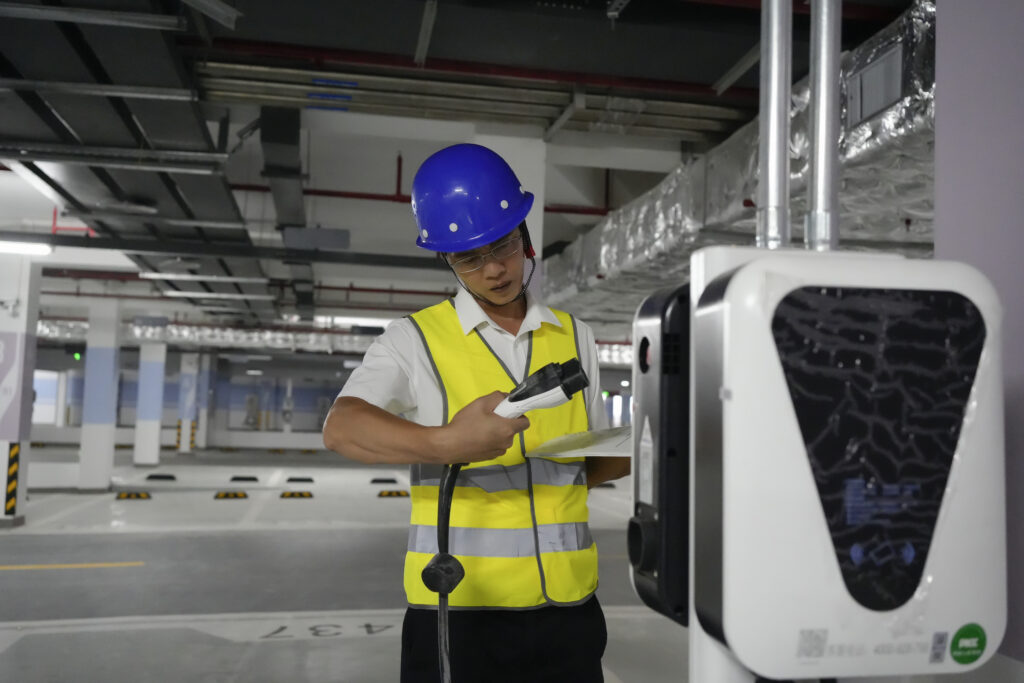
One of the simplest ways Building Managers can add long-term value is by maintaining accurate records.
Years after a charger has been installed, documentation can save countless hours when:
- another owner requests a charger
- maintenance is required
- contractors need to locate cable routes
- electrical upgrades are planned
- equipment reaches the end of its service life
- ownership changes
Useful records may include:
- as-built drawings
- cable routes
- charger locations
- equipment specifications
- commissioning reports
- warranties
- maintenance manuals
- contractor contact details
- photographs of completed works
Think of these documents as part of the building’s operational history.
Future managers—and future committees—will thank you for keeping them organised.
Maintenance: It’s More Than Cleaning the Charger
Like any piece of building equipment, EV charging infrastructure benefits from periodic inspection and maintenance.
The exact requirements will depend on the charging system and ownership arrangements, but Building Managers should understand:
- who owns each charger
- who is responsible for servicing
- recommended inspection intervals
- software update requirements
- reporting procedures if faults occur
- warranty obligations
If the building operates shared charging stations, maintenance responsibilities are generally more straightforward because they are typically managed centrally.
Where individual residents own their chargers, responsibilities should be clearly documented so expectations are understood by everyone involved.
Don’t Forget the Supporting Infrastructure
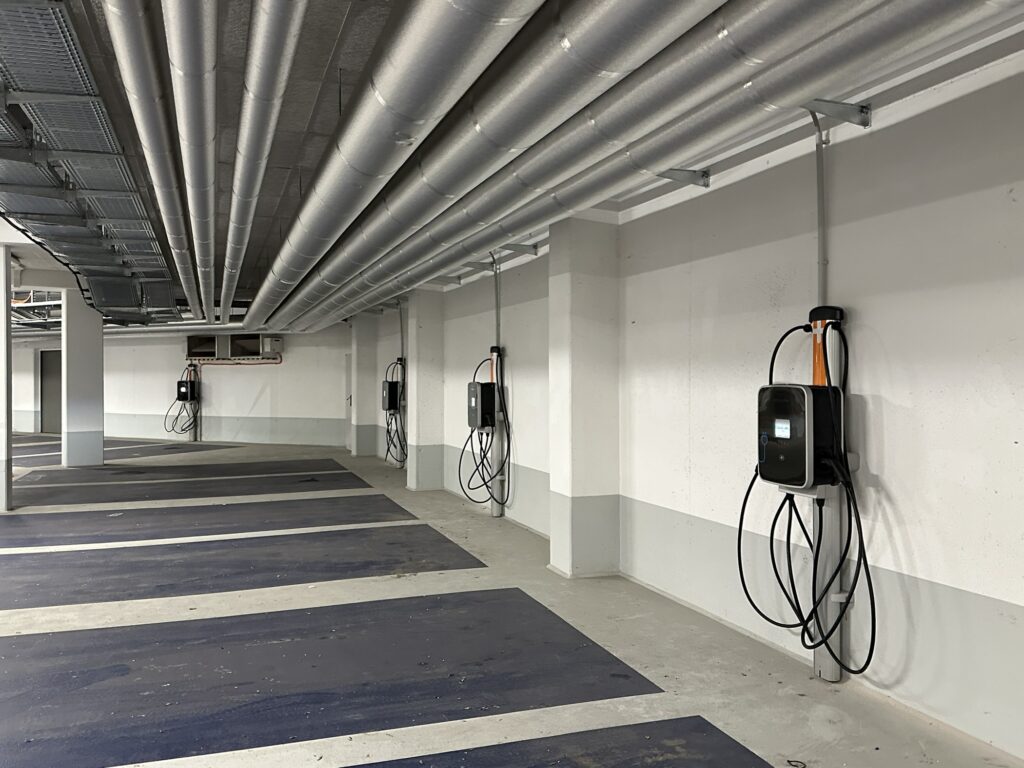
It’s easy to focus on the charger itself, but supporting infrastructure also deserves attention.
For example:
- signage
- line marking
- bollards
- cable management systems
- switchboards
- communication equipment
- network connectivity
- lighting around charging bays
These elements all contribute to a safe and functional charging environment.
Preparing for Growth
Perhaps the biggest operational challenge isn’t installing the first charger.
It’s managing the twentieth.
As EV ownership increases, Building Managers may find themselves coordinating:
- multiple contractors
- staged installations
- increased resident enquiries
- software providers
- maintenance schedules
- visitor charging
- electrical upgrades
- contractor access for future works
This is why consistency becomes so valuable.
The more standardised installations are, the easier they become to manage over time.
Key Takeaway
The first charger sets the standard for every charger that follows. Good documentation, consistent installation practices and clear operational processes can save significant time and reduce complexity as EV ownership grows.
Fire Safety: A Practical Building Management Perspective
Fire safety should always be part of broader building operations, regardless of whether the building includes EV charging infrastructure.
For Building Managers, the focus is not on becoming an EV battery expert.
It’s on ensuring charging systems are integrated into existing safety and maintenance practices.
Practical considerations include:
- ensuring charging equipment remains accessible for inspection
- keeping emergency exits and fire equipment unobstructed
- monitoring for damage to charging equipment
- reporting defects promptly
- ensuring contractors restore fire-rated penetrations correctly after cable installation
- understanding emergency procedures relevant to the building
As with other building systems, routine inspections and good housekeeping remain some of the most effective risk management tools available.
Looking Ahead: Today’s Installations Shape Tomorrow’s Operations
Most apartment buildings won’t stop at one EV charger.
Over the coming years, more residents will purchase electric vehicles, more infrastructure will be installed and more operational processes will develop around charging.
Building Managers have a unique opportunity to influence how smoothly that transition occurs.
By maintaining accurate documentation, coordinating contractors effectively, protecting common property and thinking beyond individual installations, they help create buildings that remain organised, safe and adaptable as technology continues to evolve.
In many ways, EV charging isn’t introducing an entirely new responsibility.
It’s simply becoming another part of modern building management.
The Building Manager’s EV Charging Checklist
As electric vehicle ownership continues to grow, Building Managers can play an important role in ensuring their communities are prepared.
Whether your building already has charging infrastructure or is receiving its first request, the following checklist can help guide conversations and day-to-day management.
Before Any EV Charger Is Installed
Consider whether you have:
✔ Confirmed who has approved the installation and who is responsible for the works.
✔ Reviewed the proposed installation location.
✔ Confirmed access requirements for contractors.
✔ Identified any potential impacts on common property.
✔ Requested relevant documentation for building records.
✔ Confirmed how electricity usage will be measured and allocated.
✔ Established who will be responsible for ongoing maintenance.
✔ Communicated expected works with affected residents.
During Installation Works
Monitor:
✔ Contractor access and site safety.
✔ Protection of common property.
✔ Basement traffic management.
✔ Cleanliness of work areas.
✔ Restoration of affected surfaces.
✔ Compliance with building access requirements.
✔ Completion documentation.
After Installation
Ensure you have:
✔ Updated building records.
✔ Retained warranties and manuals.
✔ Stored photographs of completed works.
✔ Documented charger locations.
✔ Recorded responsible parties for maintenance.
✔ Confirmed any ongoing inspection requirements.
✔ Added relevant information to future handover documentation.
Common EV Charging Mistakes Buildings Should Avoid
While EV charging technology is improving rapidly, many challenges arise from planning and coordination rather than the equipment itself.
Understanding common mistakes can help Building Managers identify potential issues early.
Mistake 1: Treating Every Installation as a One-Off
A building may approve its first charger without considering what happens when the next resident makes a similar request.
Over time, this can create:
- multiple charger brands
- inconsistent installation methods
- confusing maintenance arrangements
- unclear responsibilities
A consistent approach from the beginning can make future installations much easier.
Mistake 2: Not Keeping Records
A charger installed today may still be operating decades from now.
Without documentation, future managers may struggle to understand:
- where cables run
- who installed the equipment
- what approvals were provided
- who is responsible for maintenance
Good record keeping is one of the simplest ways to protect the building’s future.
Mistake 3: Focusing Only on the Charger
The charger is only one part of the system.
Operational issues often come from the surrounding environment:
- poor signage
- limited access
- inadequate protection from vehicle impact
- unclear parking arrangements
- lack of communication with residents
A successful installation considers the entire user experience.
Mistake 4: Not Considering Future Demand
A building with one EV today may have twenty in the future.
While no one can predict exactly how quickly adoption will occur, Building Managers can encourage committees to consider whether today’s decisions will support tomorrow’s needs.
Emerging Technology: What Could the Future Look Like?
EV charging technology continues to evolve quickly.
While Building Managers don’t need to become technology specialists, understanding future possibilities can help when discussing long-term planning with committees and residents.
Smart Charging Systems
Smart charging is already becoming increasingly common.
These systems allow charging infrastructure to communicate with the building and adjust electricity usage based on overall demand.
For Building Managers, this may mean:
- easier monitoring
- fewer infrastructure concerns
- better reporting
- more efficient use of electricity
Solar and Battery Integration
Some apartment buildings are exploring ways to connect EV charging with:
- rooftop solar
- battery storage
- energy management systems
This creates opportunities for buildings to use energy more efficiently and support broader sustainability goals.
Vehicle-to-Grid Technology
A developing area of interest is vehicle-to-grid technology.
This allows compatible electric vehicles to potentially return stored energy back into a building or electricity network.
While this technology is still developing, it highlights an important point:
Electric vehicles are not just changing how people travel.
They may eventually become part of how buildings manage energy.
Frequently Asked Questions
Does a Building Manager approve EV charger installations?
Generally, Building Managers do not make approval decisions. Approval requirements depend on the building’s ownership structure, rules, policies and applicable requirements. Building Managers typically support the process by coordinating access, contractors and operational requirements.
Who is responsible for maintaining an EV charger?
Responsibility depends on the ownership arrangement and the specific charging system. Some chargers are privately owned by residents, while others form part of a shared building facility. Clear documentation is important to avoid confusion.
Should every apartment building install EV chargers?
Not necessarily. Every building has different needs, infrastructure and levels of demand. However, most buildings benefit from understanding their options and preparing for future requests.
Can EV chargers damage existing building infrastructure?
When professionally designed and installed, EV charging infrastructure is intended to integrate safely with existing electrical systems. Problems are more likely to occur when installations are poorly planned, incorrectly installed or not appropriately maintained.
What should I do if a resident wants to install an EV charger?
Start by understanding the process already established for your building. The request should generally involve the relevant decision-makers, appropriate technical advice and clear documentation before works begin.
Will EV charging create more work for Building Managers?
Initially, there may be additional coordination required. However, well-planned infrastructure, clear processes and good documentation can make ongoing management much simpler as adoption increases.
The Future of Building Management Is Becoming More Connected
Apartment buildings are becoming increasingly intelligent.
From access control systems to energy monitoring, technology is changing how buildings operate and how residents interact with their homes.
Electric vehicles are another step in this evolution.
For Building Managers, the role is not to predict every future development or become an electrical specialist.
It is to help buildings adapt.
By understanding how EV charging interacts with building operations, maintaining accurate records, coordinating contractors effectively and encouraging thoughtful planning, Building Managers can help their communities transition smoothly into a changing automotive landscape.
The buildings that handle EV adoption successfully won’t necessarily be those that install the most chargers.
They will be the ones that manage the transition carefully.
Disclaimer: This article provides general information only and is intended for educational purposes. It does not constitute legal, financial, insurance, electrical or engineering advice. Every building is different, and requirements may vary depending on the building’s design, infrastructure, ownership arrangements and individual circumstances. If your building is considering EV charging infrastructure or requires guidance specific to your property, we recommend consulting with your relevant building professionals, service providers or management team before making decisions.